
Ecuador notes - September 2025
Some disorganized commentary on the recent protests and Noboa's policies in general
The government of Daniel Noboa raised the price of diesel. Knowing that protests occur every time the price of fuel is increased, they prepared for the protests. Noboa called for an immediate state of emergency and ordered extra security forces out to halt the protests before they even began. As obvious as this should be, it’s quite rare for a government to get ahead of the protest curve like this. It’s a reminder that Noboa is an above average politician who combines authoritarian instincts with some democratic pragmatism. It works for him and has kept him relatively popular with a population that wants stability and security.
The protests started slowly and were quickly shut down by the police and military. On the first day after the price increase, all the roads in the country were open at noon. At 11PM, protesters had blocked a single bridge.
The protests are currently characterized by a small number of large-scale clashes in small cities. Conaie, the country’s main indigenous federation, called for a national strike starting yesterday. There are some striking images of the protests online, including videos of the protesters forcing riot police to back down. But it’s important to note that these protests are not widespread, nor are they in the country’s major urban areas. There are some highways shut down in the country, but the protests are quite localized, and Noboa is doing his best to keep them that way.
So far, the current situation presents an enormous contrast with previous protests over fuel prices, including those that threatened Lenin Moreno in 2019. In that case, Conaie had weeks to march to the major cities including Quito. Pro-Correa protesters joined them, committing violent acts in the capital that created pressure on the government and shut down businesses. Preventing that scenario is why Noboa has acted as he has.
Also contrast Noboa’s response with Peru, where hundreds of protesters have gathered for two days in Lima and violently clashed with police. While those protests are still small, they are occurring in the capital and the main group of protesters is organized locally, as opposed to protests occurring by groups that are more rural. Another big difference is that Noboa still has an approval rating in the mid-40s while Boluarte may be the first world leader to reach an approval rating of effectively zero.
So Ecuador’s protests are contained for now, but what signals would indicate the protests are escalating?
The biggest escalation would occur if repression leads to protesters being killed. That is why the police backed down to Conaie in one town yesterday. Using lethal force against peaceful protesters is morally wrong and a poor strategic decision for a democratically elected government. The fact that the police are stopping protests where they can but backing down instead of doubling down when they are outnumbered once again suggests a smarter repression strategy than usually seen.
If the Conaie protesters can reach Quito and shut down the capital, the situation becomes far more complicated for Noboa. That this protest remains confined to provincial capitals makes it manageable.
If Conaie appears to coordinate protest organization with the Correistas, it’s a problem. Remember that these two groups hate each other. They may sometimes cooperate when facing a common opponent in Noboa, but they’d rather not.
Protests are far from the only story in the country. Noboa has a referendum planned for later this year (read this post, published in early August, for paying subscribers), with two questions approved so far by the Constitutional Court. More recently, Noboa has also discussed the possibility of a constitutional convention to rewrite the country’s top document. Though that potential rewrite is on hold for the moment, expect him to either get the question on the ballot in November or renew the push in early 2026. In the meantime, the tracks for institutional change are a political narrative that prevents the entire discussion from being about the protests.
Two big takeaways from everything above.
Noboa wants to be a consequential president. It’s not enough for him to simply make it through the next four years. He wants to be remembered for solving the country’s problems, improving security, and leaving his mark on the system, potentially through a new constitution.
Noboa thrives on campaigning against his political opponents. His government is built around a permanent campaign mentality, with the referendum and potential constitutional convention to come.
Two other notes:
First, the Diligence substack by Sebastian Angulo is covering Ecuador’s economy daily and is a nice, quick read. I’ve been finding it helpful.
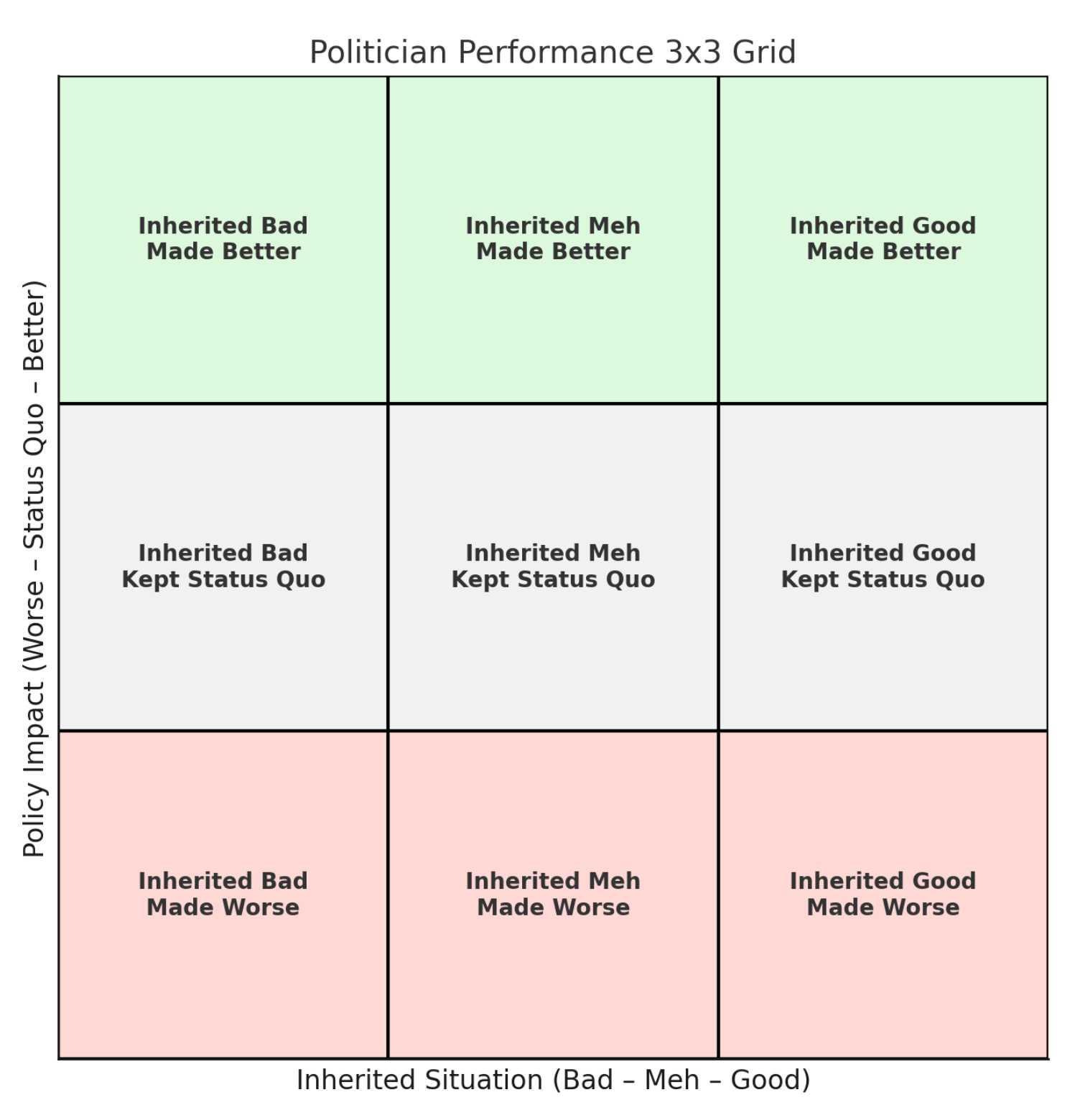
Second, while thinking about some of the comments in this post, I used AI to create the graphic below. Just a thought exercise for now, potentially for a future newsletter. No comments yet as to where Noboa or other leaders would be, though of course, they all like to think of themselves as being in the top left.
Thanks for reading.